

5 Ideas to Drive Upgrades
Plus: Updates from AiSDR, Arize, DeepL, Deputy, and Freshworks.

Welcome back to Good Better Best.
Each week, we break down real pricing and packaging moves from SaaS leaders and extract the ideas worth stealing. Below are 5 pricing and packaging ideas from the past week you can borrow for your own roadmap.
TLDR:
Use billing cycles to filter for commitment when time-to-value takes work
Shift limits from users to usage metrics that map closer to value
Offer flexible add-ons
Default to self-serve onboarding and monetize human support
Raise prices across the board, but raise the entry tier more to drive upgrades
Keep reading to go deeper on each idea, with concrete examples and commentary.
PS. We’re hosting Office Hours with pricing expert Ulrik Lehrskov-Schmidt next Friday to talk all things Enterprise pricing.
👉🏼 Sign up here and drop your questions in the thread.
🔌 PricingSaaS Partners power the next era of SaaS pricing
Need a sounding board? We’ve helped hundreds of teams figure out their pricing strategy and stack. Book a free Pricing Review →
5 Pricing Ideas to Steal This Week
1. Test Quarterly Billing (AiSDR)
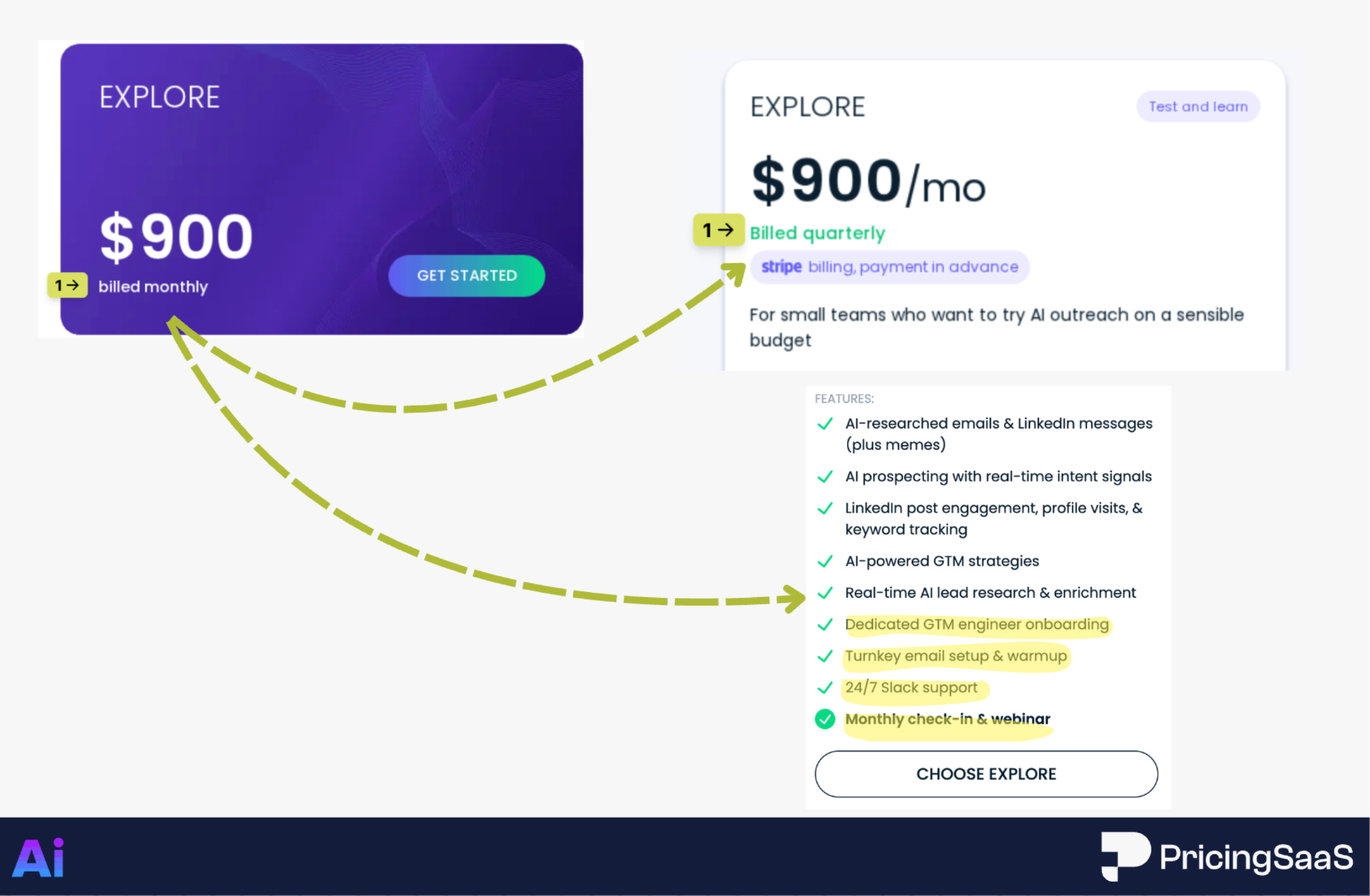
AiSDR shifted from monthly to quarterly billing. On the surface, it runs against a broader trend we’re seeing toward optionality for customers, but in this case (and for agentic products generally) it makes a lot of sense.
AiSDR’s value isn’t instant. There’s a learning curve, upfront setup, and hands-on help from their team to get customers ramped. Front-loading all that work only to have a customer churn after a month is brutal.
The shift to quarterly billing acts as a filter to ensure there’s a level of commitment from the customer, and gives AiSDR more time to deliver value.
👉🏼 Steal this: If you offer an agentic product with FDEs or hands-on support, monthly billing probably doesn’t make sense.
2. Remove Users + Tighten Usage Limits (Arize)
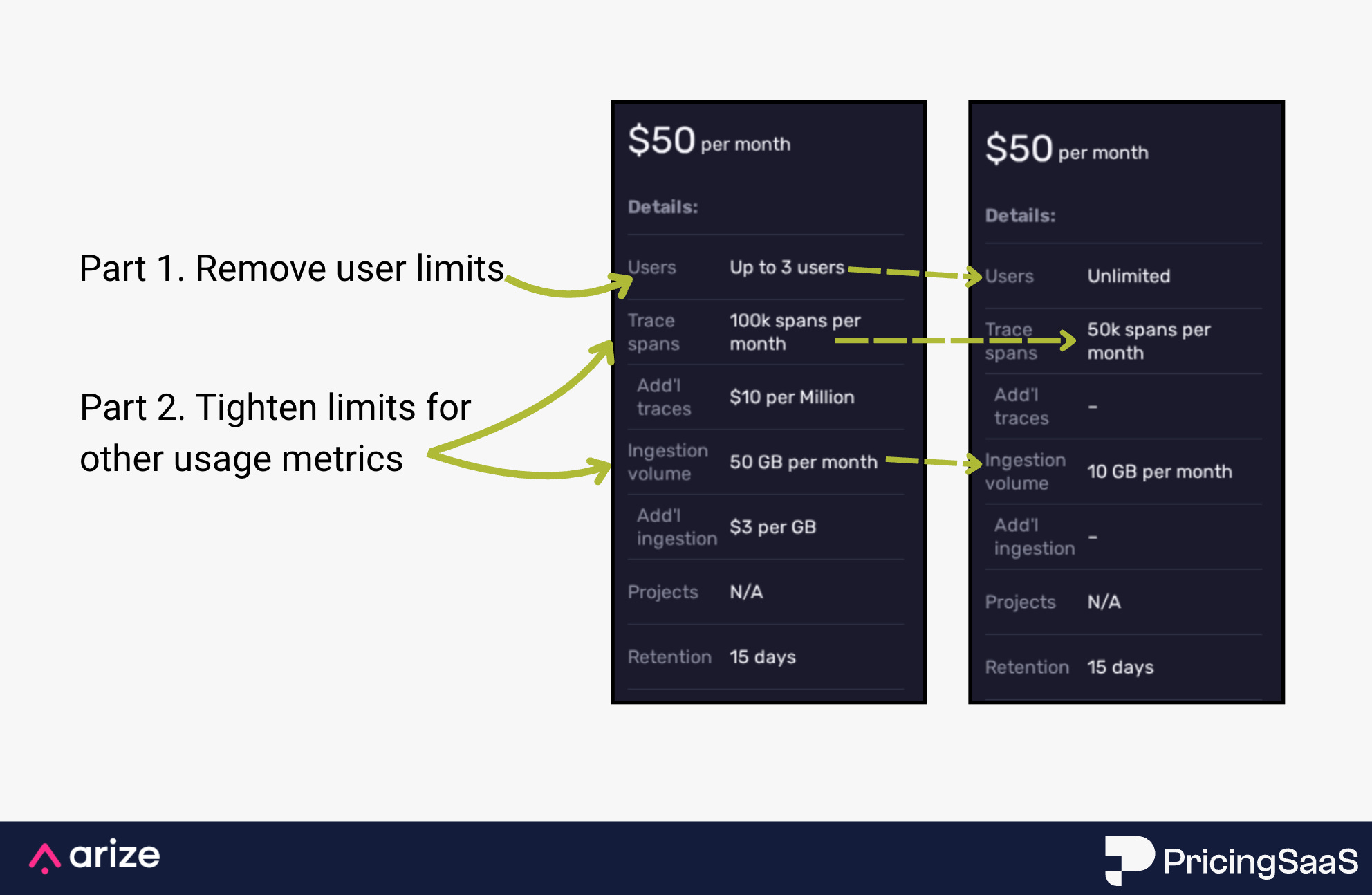
Arize removed user limits on its Pro plan, while tightening limits across more relevant usage metrics. User limits were never a great fit for Arize. Observability tools are inherently collaborative and capping users disincentives adoption.
By removing user limits, Arize made it easier for teams to add stakeholders to the product. More users leads to more traces, higher ingestion, and faster paths to hitting real usage thresholds. It’s a move to drive both activation and monetization.
👉 Steal this: This is one of those cases where seat-based pricing doesn’t make sense. If the value of your product lies closer to other metrics, consider removing seat-based caps, and adding friction in places that are closer to value.
3. Introduce a flexible add-on (DeepL)
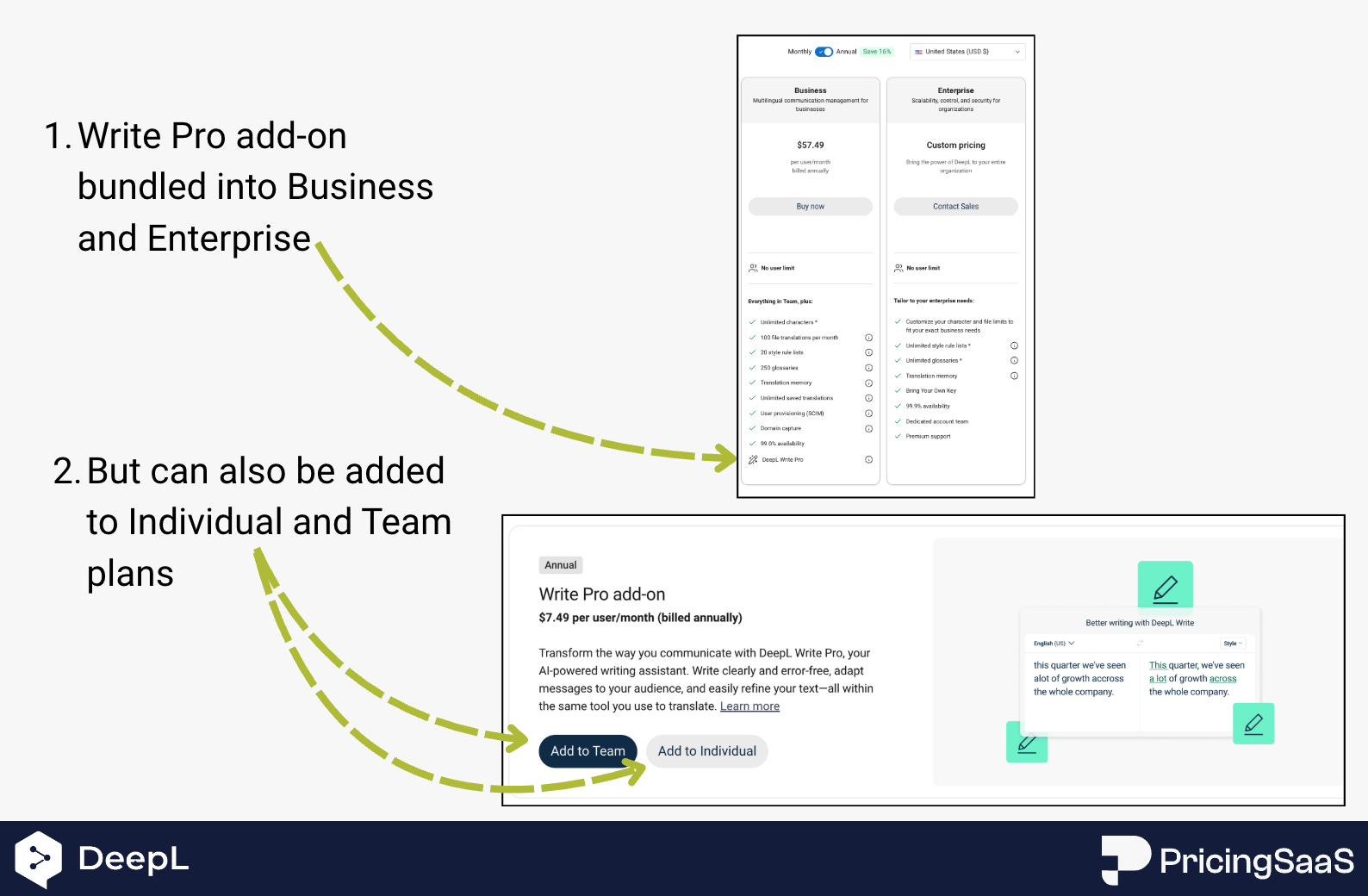
DeepL bundled its Write ProAI add-on into the Business plan, but didn’t fully kill the add-on. Individual and Team customers can still purchase Write Pro AI separately.
This is a unique application of the optionality trend we’re seeing, and also shows how DeepL and others see AI fitting into their product (Notion and Loom also bundled AI add ons into Business tiers).
For individuals and small teams, the add-on remains a low-commitment way to test AI-powered writing and understand where it fits into daily workflows. For Business customers, AI is standard.
👉 Steal this: Consider offering a flexible add-on that comes standard with higher tiers, but gives users on lower tiers a chance to discover value.
4. Rethink Default Onboarding (Deputy)
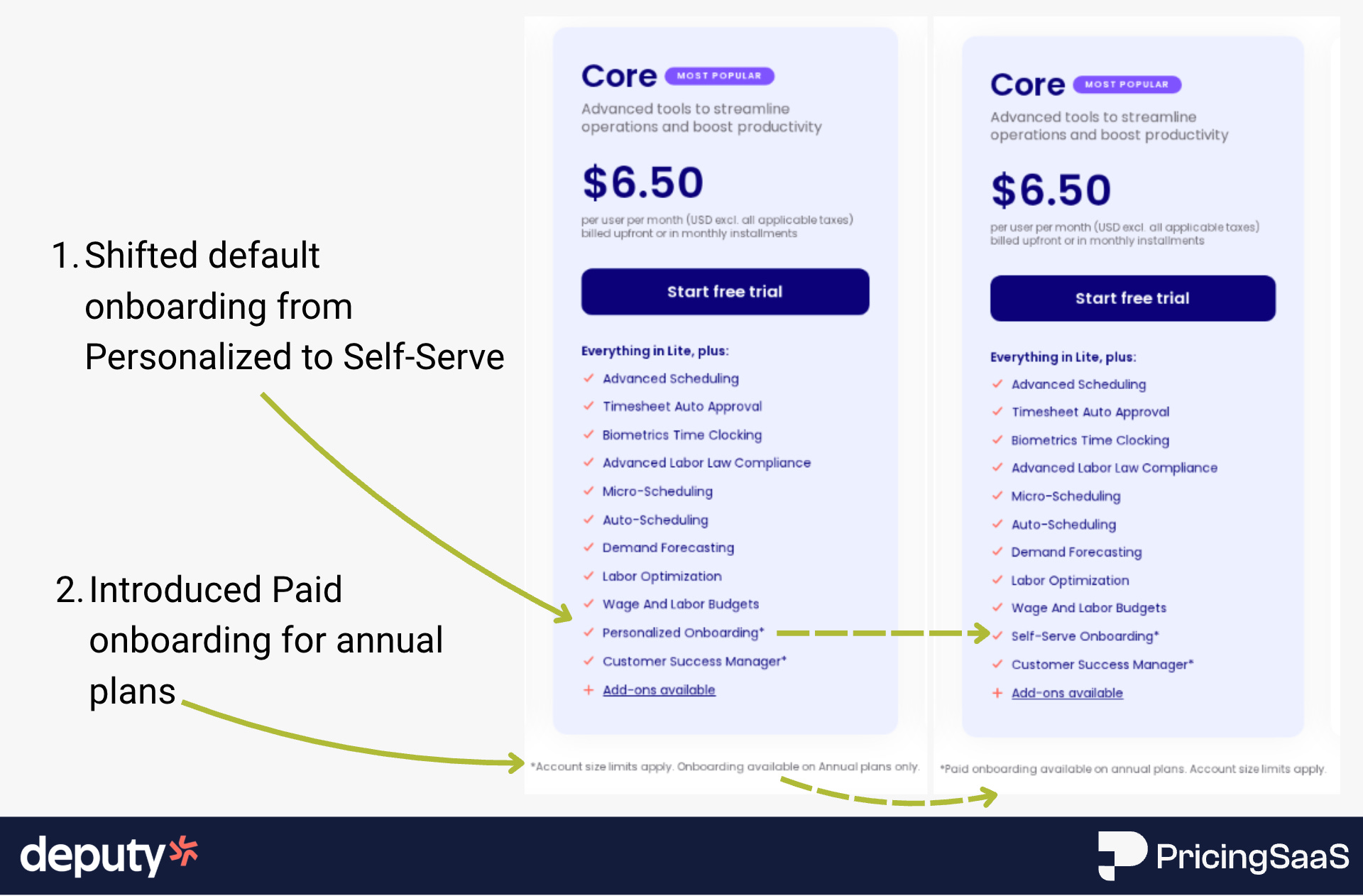
Deputy changed default onboarding from personalized onboarding to self-serve. At the same time, it introduced paid onboarding as an option for annual customers.
Couple things at work here:
AI is increasingly making product-led onboarding a more viable option
This ensures high-touch resources are spent with customers who’ve shown commitment.
👉 Steal this: Default to self-serve onboarding, and leverage human support to drive deeper commitment (and incremental monetization).
5. Move the whole ladder (Freshworks)
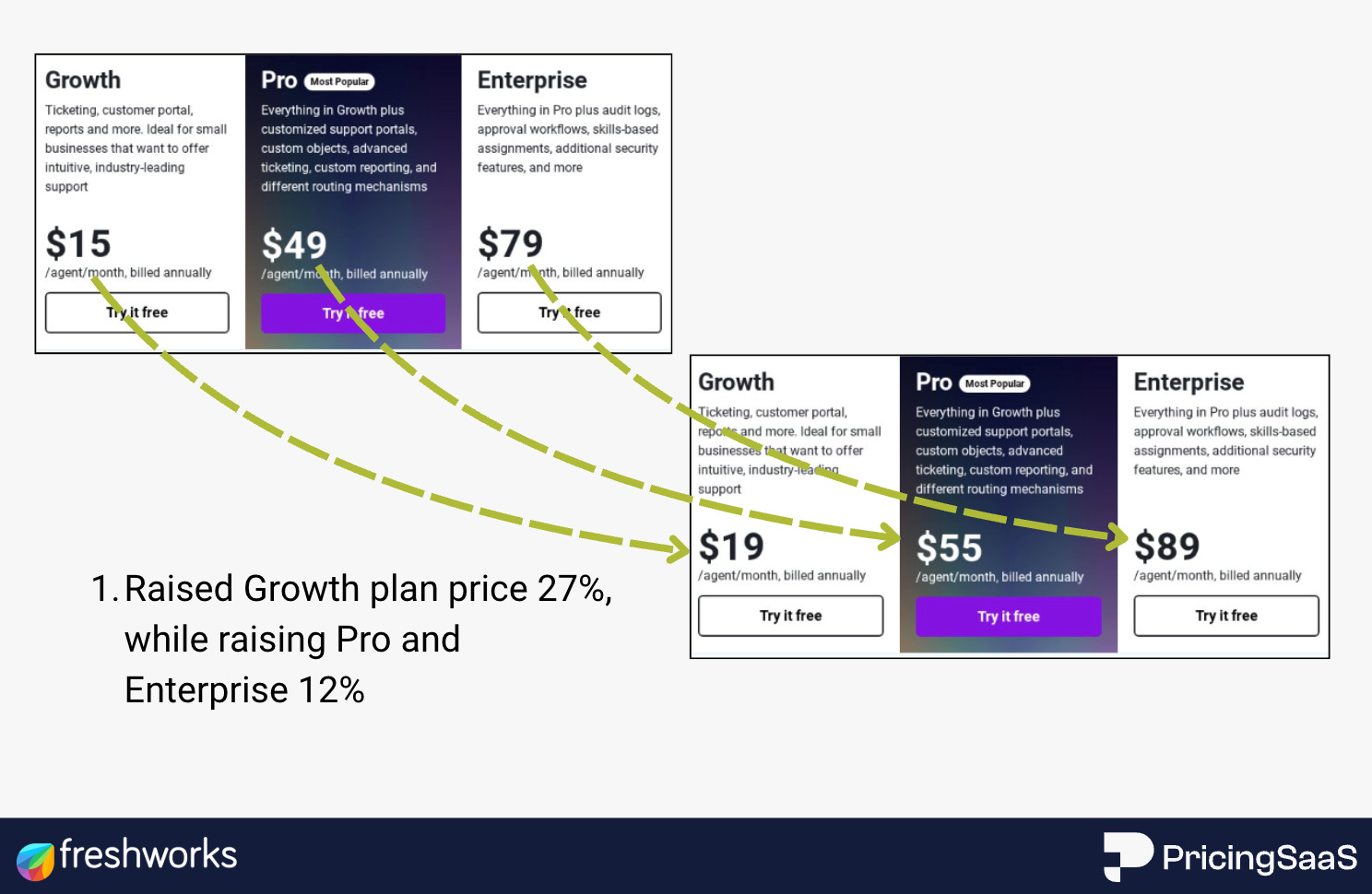
Freshworks raised prices across all three plans, but not evenly. The Growth plan went up ~27%, while Pro and Enterprise increased closer to ~12%.
In our Pricing Change Log, we found the average same-plan price increase fell around 20% in both 2024 and 2025, and these changes are equidistant on each side of that benchmark. Freshworks clearly believes the full product is worthy of a higher price, but seems to want to push more customers towards Pro.
👉 Steal this: When raising prices, move the whole ladder. Use larger increases at the entry tier to drive upgrades, but don’t freeze your higher tiers if your best customers can pay more.
Elsewhere…
Ahrefs upgraded Project Boost Max with unlimited AI URL detection
Browserstack expanded Enterprise idle timeout from 10 to 45 minutes
Datadog introduced dataset and connection limits to Pro and Enterprise tiers
Intercom added its 90% startup discount with free year of Fin AI agent to page
Klaviyo extended introductory pricing.
Check out more updates from JazzHR, HubSpot, and Dashlane on PricingSaaS →
Thanks for reading! When you’re ready, here’s how we can help:
Community: Answers from real pricing experts. Apply for membership →
Data: Access to news, research, and analysis. Sign up for free →
Advisory: Free pricing advice. Book a 30-minute call →