

How you package is how you sell
Plus: Updates from Slack, Anthropic, Auth0, ElevenLabs, and AiSDR.

Welcome back to Good Better Best.
Each week, we break down real pricing and packaging moves from SaaS leaders and extract the ideas worth stealing. Today we have 5 fresh pricing changes:
Slack introduced an AI Agent
Anthropic pulled its Memory in Conversations feature into Pro
Auth0 simplified Enterprise connections
ElevenLabs adjusted limits and raised prices
AiSDR lowered meeting output expectations
Links to those changes below. Before we get there, I wanted to share notes from a recent read that I highly recommed: You’re Leaving Money on the Table, by Schematic CEO Fynn Glover.
🔌 PricingSaaS Partners power the next era of SaaS pricing
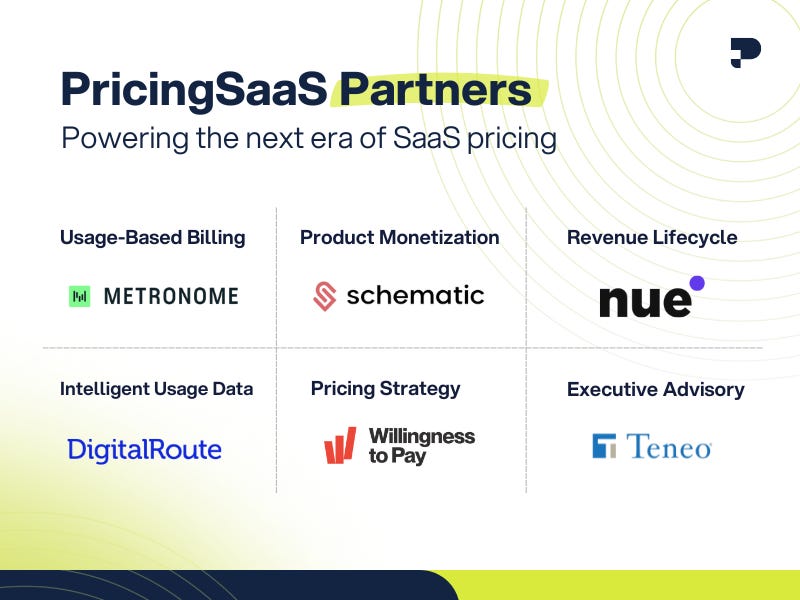
Need a sounding board? We’ve helped hundreds of teams figure out their pricing strategy and stack. Book a free Pricing Review →
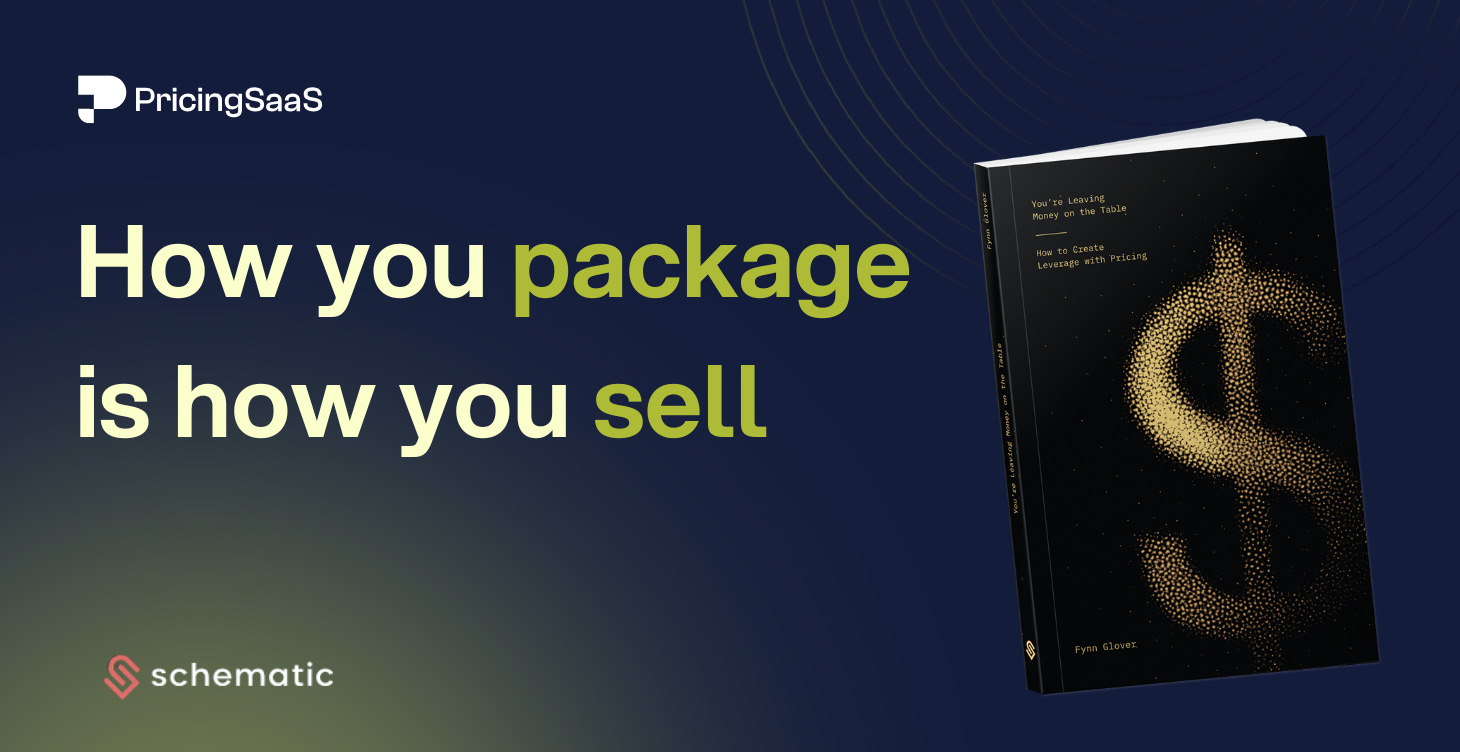
Over the past year, there’s one person I’ve sent more SaaS leaders to than anyone else when they have questions about their monetization stack:
Fynn Glover, the CEO of Schematic.
Fynn is a founder and operator himself. He’s seen the impact of pricing from multiple angles. At Schematic, he’s building something that solves one of the most pressing problems in SaaS: enabling companies to rapidly iterate on pricing and packaging.
There’s a lot of talk about the right pricing strategy. But if you don’t have the right pricing architecture, your strategy is irrelevant.
We’re entering a season in SaaS where rapid pricing iteration is becoming a core competency. Last year, we saw 1,800 pricing changes across the 500 companies in the PricingSaaS index, and the fastest growing companies (e.g., OpenAI, Lovable) are updating pricing multiple times per month.
If you aren’t used to iterating on pricing, that likely feels daunting. Lucky for you, Fynn just wrote a book. It’s called You’re Leaving Money on the Table.
I read it earlier this week. It’s a quick, concise, and actionable read that breaks down how to make pricing work for you. It should be required reading for SaaS founding teams.
The book is full of gold, but my favorite takeaway is the idea that how you package is how you sell, and I want to unpack that with 3 core ideas from the book below.
Idea 1: PLG and SLG don’t compete. They complete each other.
The best SaaS companies today run both motions: PLG to acquire users, SLG to monetize and retain them. The two aren’t in tension; they’re complementary.
But making them work together is one of the biggest challenges in pricing and packaging design — it gets at what people mean when they say they want a pricing model that scales. Fynn’s perspective is that this is inherently a systems problem:
For PLG and SLG to work together, your systems must connect product behavior to pricing behavior. To do this, you need deep telemetry: data that shows who’s using what, how often, and how that usage correlates with revenue.
Historically, companies have started with one or the other. Maybe they started with PLG (e.g., Dropbox, Canva) and layered Sales on later. Or they started Sales-Led (e.g., HubSpot, Adobe) and layered a Product-Led motion later. Either way, if you only start with one, nailing the other is hard.
That’s why you should start with both. At the core of getting it right is your pricing metrics. First, you need to choose the right ones, then you need to set thoughtful limits.
Idea 2: Pricing metrics must pass two tests.
When choosing what to charge for, Fynn lays out two important tests:
The Customer test: if the chosen value metric scales, would the customer feel that you have earned an increasing share of their wallet?
The Founder Test: Can a new sales rep explain the metric in 15 seconds without slides? If not, it will create friction at checkout and in procurement.
As an Account Executive, I’ve lived both sides of this. At HubSpot, we had a pricing metric that sales could explain and customers could understand (Contacts). This was incredibly powerful for sales and allowed us to tell a clear story. Importantly, we had features differentiating each plan that aligned with the sophistication needed at different contact levels.
After leaving HubSpot, I worked at a company that sold email testing software. We went from a flat fee to reverse-engineering a value metric to unlock usage-based expansion. I saw firsthand how brutal it is to sell a value metric that didn’t previously exist, especially to existing customers. Without much feature differentiation, customers would simply reduce their usage to fit within the lowest tier.
In my experience, people make pricing metrics harder than they have to be. Answer the two questions above with a “yes” and you’re in good shape. Importantly, this should apply to not just your primary pricing metric, but secondary usage metrics as well. Secondary metrics are some of the most effective ways to drive upgrades.
Idea 3: Limits are the connective tissue of GTM.
Handled well, limits create a seamless bridge from self-serve to enterprise. Here’s Fynn again:
A limit is the invisible boundary between free and paid, between product and sales, between usage and upgrade. When a customer approaches a limit, you have a signal. When they surpass it, you have an opportunity.
Take Zoom and Slack. Both charge for Users as the primary metric, but in the free plan, they limit meeting duration and message history respectively. The limits on these metrics connect the dots between PLG and SLG.
With the right systems, limits power important actions across product and sales. Some examples:
When users near a usage limit, the product automatically notifies them.
If they hit the limit, perhaps the product triggers a paywall.
In parallel, the sales team gets an alert: “This account just maxed out their limit.”
In this way, usage-based pricing isn’t just a strategy decision. It’s a technical capability. The two are inseparable. Think about the recent rise of credit models. Offering a credit model without visibility to usage would lead to uncertainty, and likely reduce usage as customers worry they might trip their credit limit. By improving your pricing architecture, you not only empower your sales team, you create a better experience for customers.
Wrapping Up
Patrick Campbell used to say that most companies spend more time choosing the toilet paper for their office bathroom than they spend on pricing. That’s still true for a lot of teams, but it’s no longer viable. AI has fundamentally transformed SaaS pricing dynamics. While there’s no perfect pricing model, the only certainty is that you need to be able to evolve with your product and market.
The only way to do that is to get comfortable iterating on pricing. Fynn’s book is the best starting place I know to get the ball rolling.
Read it here: You’re Leaving Money on the Table
Elsewhere…
Slack launched Slackbot, a personal AI agent on Business and above.
Anthropic added Memory across Conversations to the Claude Pro plan.
Auth0 introduced Express Configuration for Enterprise Connections.
ElevenLabs cut included minutes and raised the price of additional minutes.
AiSDR reduced the expected output of the Grow plan by 27%
Check out more updates from Ahrefs, Amplitude, and Superhuman on PricingSaaS →
Thanks for reading! When you’re ready, here’s how we can help:
Community: Answers from real pricing experts. Apply for membership →
Data: Access to news, research, and analysis. Sign up for free →
Advisory: Free pricing advice. Book a 30-minute call →
Great shout as always Rob 👊🏾
That Eleven labs price increase is like 4X (50% cut and 2X price)….that’s huge
Kinda makes me think that these (more efficient than labour) costs will surpass labour cost by 2035